"I-GUM" - Non-Toxic Silicone Rubber - Paste Form Completely non-toxic silicone rubber in paste to be directly applied onto the model you want to replicate. Prior to using, it should be mixed with its catalyst paste (in equal parts, 1: 1) until you have a homogeneous mixture. Due to its non-stick performance on all surfaces, you don’t need to wash the tools after use and it is not necessary to apply other release agents to the model. In addition to copying the shape of small products, this silicone is ideal for creating the moulds of coasters, trays and other similar decorations: the sides are made of silicone, and the base is made of plexiglass or films.
$26,99
HIGH-QUALITY SILICONE MOULD FOR HANDCRAFTS This flat Coaster Mould has a smooth interior and produces a beautiful coaster with a professional finish. Use our heat-resistant resin to make something that is not only functional. Dimensions: D.26 cm Height: 1cm If you’re using these moulds to make coasters, we recommend that you add a 3mm thick clear layer of Heat-Resistant resin first in your mould. Let it set and then add more resin with colour, ink, glitter, flowers etc. Once turned out (after 3-4 days), what was the bottom will be the top and heat-resistant up to 20oC! Remember that our Heat-Resistant resin needs between 72 h to achieve full cure, so don’t place a hot cup on it too early. DO-IT-YOURSELF. Material: Silicone, Colour: Semi-transparent; Reusable, Non-stick, Easy to use and clean. Warning: do not use aggressive solvents, High-quality moulds, heat-resistant: -40°C to + 210°C [-104° F to +410° F]
$13,20
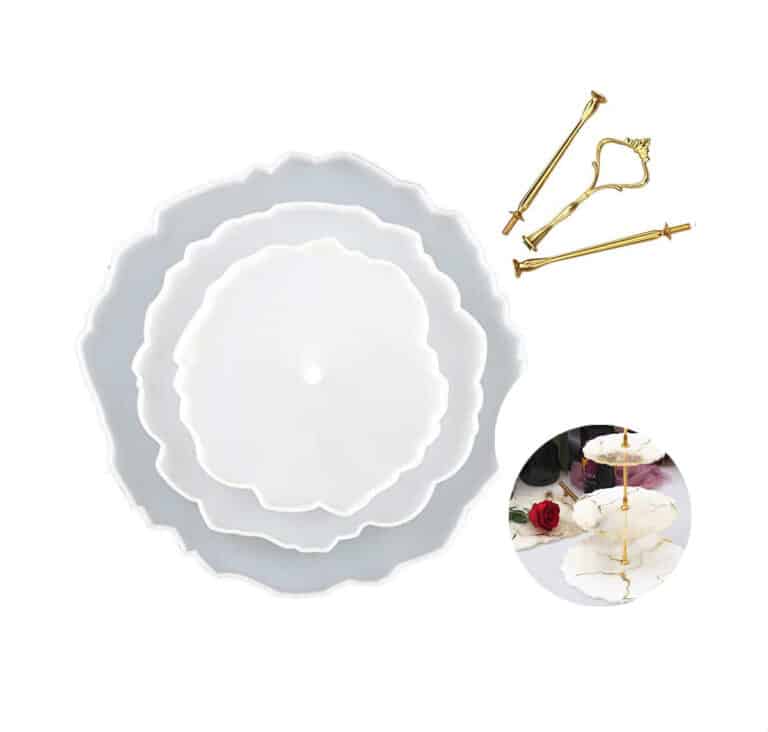
HIGH-QUALITY SILICONE MOULD FOR HANDCRAFTS This flat Coaster Mould has a smooth interior and produces a beautiful coaster with a professional finish. Use our heat-resistant resin to make something that is not only functional but also ideal for making three-tier fruit and dessert trays, coasters, decorative elements and home and office decorations. This product can be reused over the years. The Set includes: Silicone molds: D. 155 mm – 1 pcs → 6.1 in – 1 pc D. 205 mm – 1 pcs → 8.1 in – 1 pc D. 255 mm – 1 pcs → 10.0 in – 1 pc Support rod (by variation): 110 mm – 2 pcs → 4.3 in – 2 pcs 122 mm x P. 47 – 1 pcs → 4.8 in x P. 1.9 – 1 pc If you're using these moulds to make coasters, we recommend that you add a 3mm thick clear layer of Heat-Resistant resin first in your mould. Let it set and then add more resin with colour, ink, glitter, flowers etc. Once turned out (after 3-4 days), what was the bottom will be the top and heat-resistant up to 200C! Remember that our Heat-Resistant resin needs up to 72 hours to achieve full cure, so don't place a hot cup on it too early. DO-IT-YOURSELF. Material: Silicone, Colour: Semi-transparent; Reusable, Non-stick, Easy to use and clean. Warning: do not use aggressive solvents, High-quality moulds, heat-resistant: -40°C to + 210°C [-104° F to +410° F]
$17,49
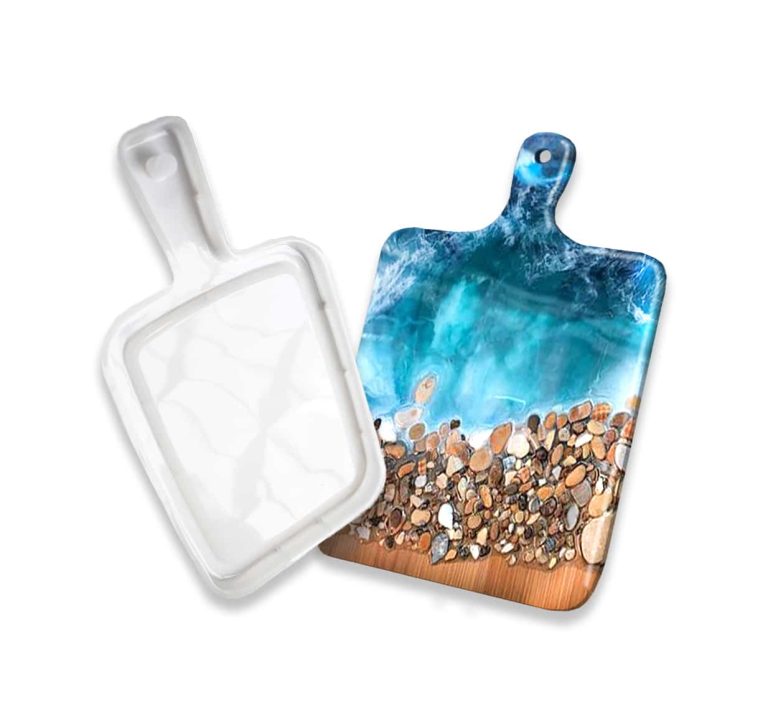
Professional model “Rectangular Cutting Board” in high quality silicone for creations in resin. Excellent for creating personalized, artistic and decorative cutting boards. Ideal decor for the home, this product can be reused over the years. If you’re using these moulds to make coasters, we recommend that you add a 3mm thick clear layer of Heat-Resistant resin first in your mould. Let it set and then add more resin with colour, ink, glitter, flowers etc. Once turned out (after 3-4 days), what was the bottom will be the top and heat-resistant up to 200C! Remember that our Heat-Resistant resin needs up to 72 hours to achieve full cure, so don’t place a hot cup on it too early. DO-IT-YOURSELF. Material: Silicone, Colour: Semi-transparent; Reusable, Non-stick, Easy to use and clean. Warning: do not use aggressive solvents, High-quality moulds, heat-resistant: -40°C to + 210°C [-104° F to +410° F] Attention! Remove the product from the mold no later than 12 hours after pouring the resin. Otherwise, there is a chance of local adhesion of the resin to the mold.
$8,95
To ensure optimal adaptation of resin to the mold, it is essential to follow a few key steps:
- Start by thoroughly cleaning the mold to remove any residues from previous resin casts.
- Use specific release agents designed for resins to prevent adhesion to the mold.
- Gently heat the mold before pouring the resin to facilitate even distribution.
- Select resins with a suitable working time that meets your requirements, allowing for precise molding without rushing.
- Adhere closely to the instructions provided by the resin manufacturer to achieve the best adaptation results.
By following these guidelines, you can effectively and precisely facilitate the resin's adaptation to your mold.
How to Prevent Bubbles in Epoxy Resin
Preventing the formation of bubbles in epoxy resin during processing is crucial. Here are some useful tips to help you achieve a bubble-free finish:
- Work in a clean, dust-free environment to minimize contamination.
- Thoroughly mix the resin following the manufacturer's instructions to prevent the formation of air bubbles.
- Use a torch to eliminate surface bubbles after pouring the resin into molds.
- Avoid excessive agitation during mixing to reduce bubble formation.
- Consider using a vacuum degassing chamber if necessary to effectively remove air bubbles.
Techniques for Achieving Smooth Surfaces with Epoxy Resin
To achieve smooth surfaces with epoxy resin, it is essential to follow specific techniques
- Prepare the surface meticulously by sanding and cleaning to eliminate imperfections.
- Apply a thin, even layer of resin using a brush or spatula.
- Use a torch to remove any air bubbles and ensure a flawless finish.
- Allow the resin to dry completely in a dust-free, dry environment.
- If needed, perform a final sanding to achieve a smooth, uniform surface.
By carefully implementing these techniques, you can achieve high-quality, smooth surfaces with resin.
Enhancing Resin Resistance in Molds
To improve the resistance of resin in molds, consider the following practices:
Select resins suitable for the molding process and operational conditions.
Incorporate reinforcing fillers like glass or carbon fibers to enhance mechanical strength.
Monitor the mixing process diligently and remove bubbles to prevent defects.
Maintain proper temperature and pressure during the polymerization phase.
Apply non-stick coatings or release agents to aid in resin extraction from the mold without causing damage.
By following these recommendations, you can produce molds with superior strength and quality resin.
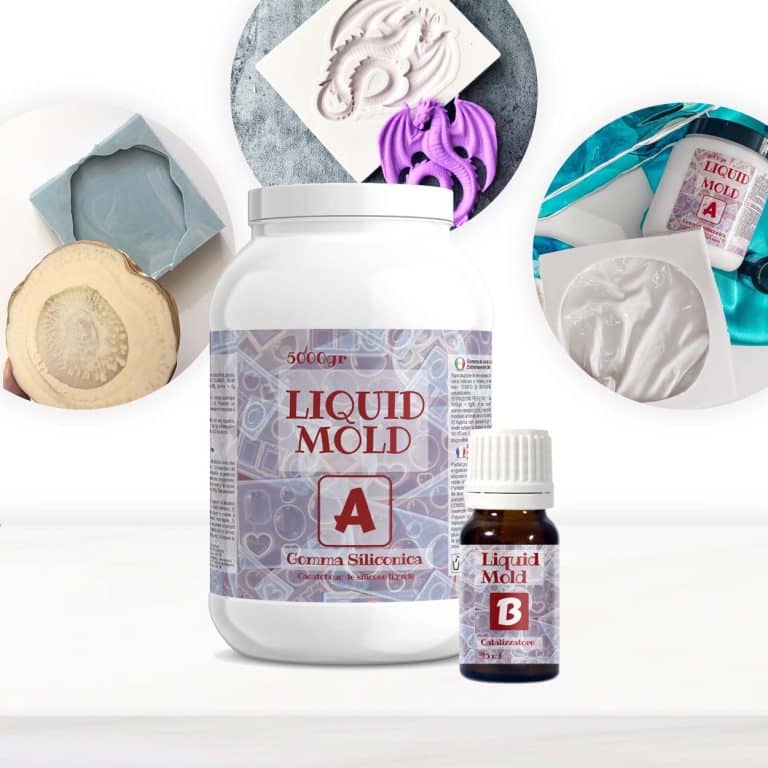
CASTING LIQUID SILICONE RUBBER – for mold-making. Two-component A + B. Liquid silicone rubber for mold-making; able to penetrate everywhere and to reproduce every small detail. It is suitable for making molds for small objects, even with very fine details and noticeable undercuts. Liquid Silicone Rubber for Making Highly Detailed Molds. Compatible with Resin, Soap and Polymer Pastes. Ideal for multiple reproductions of models and complex shapes and jewelry of any kind. White Color – Mixing Ratio: 100: 2 by weight (for 20 Shore type), 100:3 by weight (for 15 Shore type). Complete cure in 12 hours. Liquid medium-hard condensation pourable silicone rubber. It possesses high mechanical characteristics, and it is suited for the preparation of molds with fine details: reproduction of bronze statues (artistic foundries), serial reproduction of complex objects in resin (polyester, polyurethane and epoxy), in plaster, natural and synthetic wax, concrete (e.g., statues, decorative garden items, decorative candles, prototypes, decorative ceramics, rosettes, frames, faux wood decorations, etc.). Castings for technical products. Technical Features: + Mix ratio: 100: 2 by weight (for 20 Shore type), 100:3 by weight (for 15 Shore type), + Pot Life – 60-80 min; + Pouring time – 60-80 min; + Demold time – 12 hours; + Hardness – 20 + -3 Shore A + Color – white, semi-gloss.
$19,49
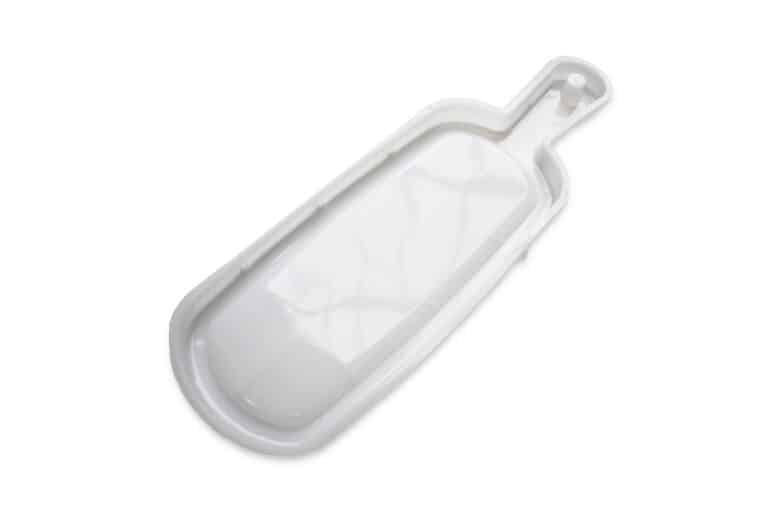
HIGH-QUALITY SILICONE MOULD FOR HANDCRAFTS Professional model “Rectangular Cutting Board” in high quality silicone for creations in resin. Excellent for creating personalized, artistic and decorative cutting boards. Ideal decor for the home, this product can be reused over the years. Dimensions: 12×34.5cm If you're using these moulds to make coasters, we recommend that you add a 3mm thick clear layer of Heat-Resistant resin first in your mould. Let it set and then add more resin with colour, ink, glitter, flowers etc. Once turned out (after 3-4 days), what was the bottom will be the top and heat-resistant up to 200C! Remember that our Heat-Resistant resin needs up to 72 hours to achieve full cure, so don't place a hot cup on it too early. DO-IT-YOURSELF. Material: Silicone, Colour: Semi-transparent; Reusable, Non-stick, Easy to use and clean. Warning: do not use aggressive solvents, High-quality moulds, heat-resistant: -40°C to + 210°C [-104° F to +410° F]
$9,74
Soft silicone mould for resins. Mould made with professional silicone and absolutely free of imperfections. Non-deformable mould, of great resistance and durability. Type of manual technique: creation of jewelry box. Material: Silicone Color: Semi-Transparent; Reusable, non-stick, easy to use and clean. Glass measures: 11 x 11 CM / H. 6. 5 CM Caution: do not use aggressive solvents for cleaning. High quality moulds, thermal resistance: -40 + 210 centigrade. Attention! Remove the product from the mold no later than 12 hours after pouring the resin. Otherwise, there is a chance of local adhesion of the resin to the mold. Copyright © Resin Pro Srl. The reproduction (total or partial) of the work by any means made and its making available to third parties, either free of charge or for a fee is prohibited.
$7,95
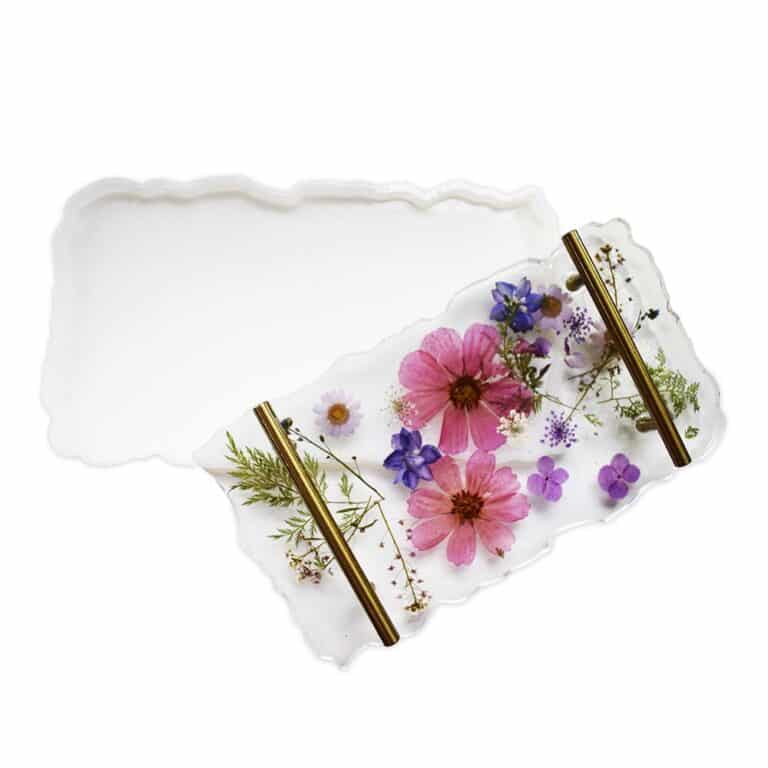
Professional mold "tray" composed of high quality silicone for resin creations. Excellent for making coasters, decorative elements, and home or office decor, this product can be reused over the years. Size: 30.5 cm x 17 cm Thickness:1 cm Color: white The mold is characterized by flexibility and versatility of use. Resistant to temperatures ranging from -60° C to +230° C. Ideal for professional use in the decorative world. Advantage: * Easy storage * Easy to wash, does not change the shape for long time. * Easy extraction Please, pay your attention! Handles are not included. Copyright © Resin Pro Srl. The reproduction (total or partial) of the work by any means made and its making available to third parties, either free of charge or for a fee is prohibited.
$11,66
ResinPro: one supplier for all your needs
15 years of experience at your complete disposal, supplying resins and accessories for creativity, industry, DIY, flooring and marine applications.
At your home, directly from the manufacturer!
ResinPro is the direct manufacturer of our resin range for companies and hobbyists, guaranteeing the lowest prices on the market.
Learn more
The widest range of resins in the US!
We offer resins for every need, from artistic creations to marine and construction applications, far beyond the “limited” selection typically found in local DIY stores.
Expert technical support!
Our technicians provide free remote consulting to help you avoid mistakes and ensure you achieve the result you want — unlike “generic retailers” who sell 1,000 different products.
get a free consultation
RESIN PRO is a leader in resin production and distribution!
24-hour delivery: We ship across the US on the same day. Enjoy convenient home delivery with our appointment service—our courier will contact you in advance and deliver the package to your preferred location, or leave it at an alternative address of your choice.

Full support!
We provide continuous support from preparation to final application, including remote technical assistance, ensuring a smooth experience.
Talk with a specialist and place a phone order without registration and without credit cards!
 Free shipping on orders over €199,00
  Shipping Tracking!


 Google
 Facebook